Structural Checks for Older Wood Decks Before Labor Day Hosting
Alsup's Construction, LLC • August 19, 2026
A backyard barbecue is the perfect way to close out the summer season in Michigan. But older wood decks carry hidden structural risks that become obvious only when loaded with people and heavy grills. At Alsup's Construction, LLC, we inspect outdoor living spaces that look fine on the surface but are failing underneath. Knowing exactly where to look can prevent a sudden structural failure during your Labor Day gathering.
Wood elements degrade at different rates depending on their exposure to moisture and ground contact. Most homeowners only notice peeling stain or splintered surface boards, completely missing the rotted support posts below. Taking a few minutes to inspect the framing saves you from expensive emergency repairs later on. We put together the most critical checks you need to perform before inviting a crowd onto your deck.
What to Check:
- Tip 1: Inspect the Ledger Board Connection
- Tip 2: Probe the Support Posts for Hidden Rot
- Tip 3: Check the Joist Hangers and Fasteners
- Tip 4: Test the Railing Rigidity
- Tip 5: Evaluate the Surface Board Condition
- Frequently Asked Questions
- Securing Your Outdoor Entertainment Space
Tip 1: Inspect the Ledger Board Connection
The ledger board attaches the entire deck structure to your house. When this vital connection fails, the deck pulls away from the wall and collapses instantly.
• Look behind the board: Check for proper metal flashing that keeps rainwater out of the house framing.
• Check the bolts: Ensure half-inch lag screws or through-bolts are used instead of standard framing nails.
• Inspect for rot: Press a flathead screwdriver into the wood near the fasteners to check for hidden soft spots.
Tip 2: Probe the Support Posts for Hidden Rot
Ground-contact moisture is the primary enemy of structural deck posts. Even pressure-treated lumber will eventually succumb to rot if it sits directly in pooling water or wet soil.
• Dig down slightly: Move the dirt away from the base of the posts to check the wood just below ground level.
• Look for concrete footings: Ensure the wooden posts sit on elevated metal brackets rather than being buried directly in the earth.
• Check the grain: Watch for deep vertical cracks known as checking that travel right through the center of the post.
We often replace older wooden structures that have reached the end of their safe lifespan. This transition from a failing deck to a highly secure new build is something our clients appreciate deeply.
► Client Experience: I had a major reconstruction project this summer and I chose Alsup to build my exterior deck. The crew is extremely hard-working and pays attention to detail like no one else. I highly recommend that you call them. Their team is phenomenal!
Knowing the framing is rock solid brings total peace of mind when hosting family and friends.
Tip 3: Check the Joist Hangers and Fasteners
Metal hardware holds the floor joists to the main support beams. Over years of seasonal temperature shifts in cities like Brighton, these metal components can rust and lose their grip on the lumber.
• Look for missing nails: Every round hole in a metal joist hanger must have a proper structural nail driven into it.
• Check for rust: Heavy flaking rust on the hangers means the protective galvanized coating has failed and replacement is necessary.
• Inspect the lumber: Look for dark water stains around the metal hardware that indicate ongoing moisture problems.
Tip 4: Test the Railing Rigidity
Railings take a lot of abuse from people leaning on them during casual parties. A wobbly railing is a major safety hazard for any raised outdoor living space.
• Give it a push: Lean firmly against the top rail to see if the support posts flex or shift.
• Check the post attachments: The main rail posts must be bolted directly to the deck frame and not just nailed to the surface boards.
• Look at the balusters: Ensure the vertical slats are securely fastened and spaced closely enough to prevent small children from slipping through.
Tip 5: Evaluate the Surface Board Condition
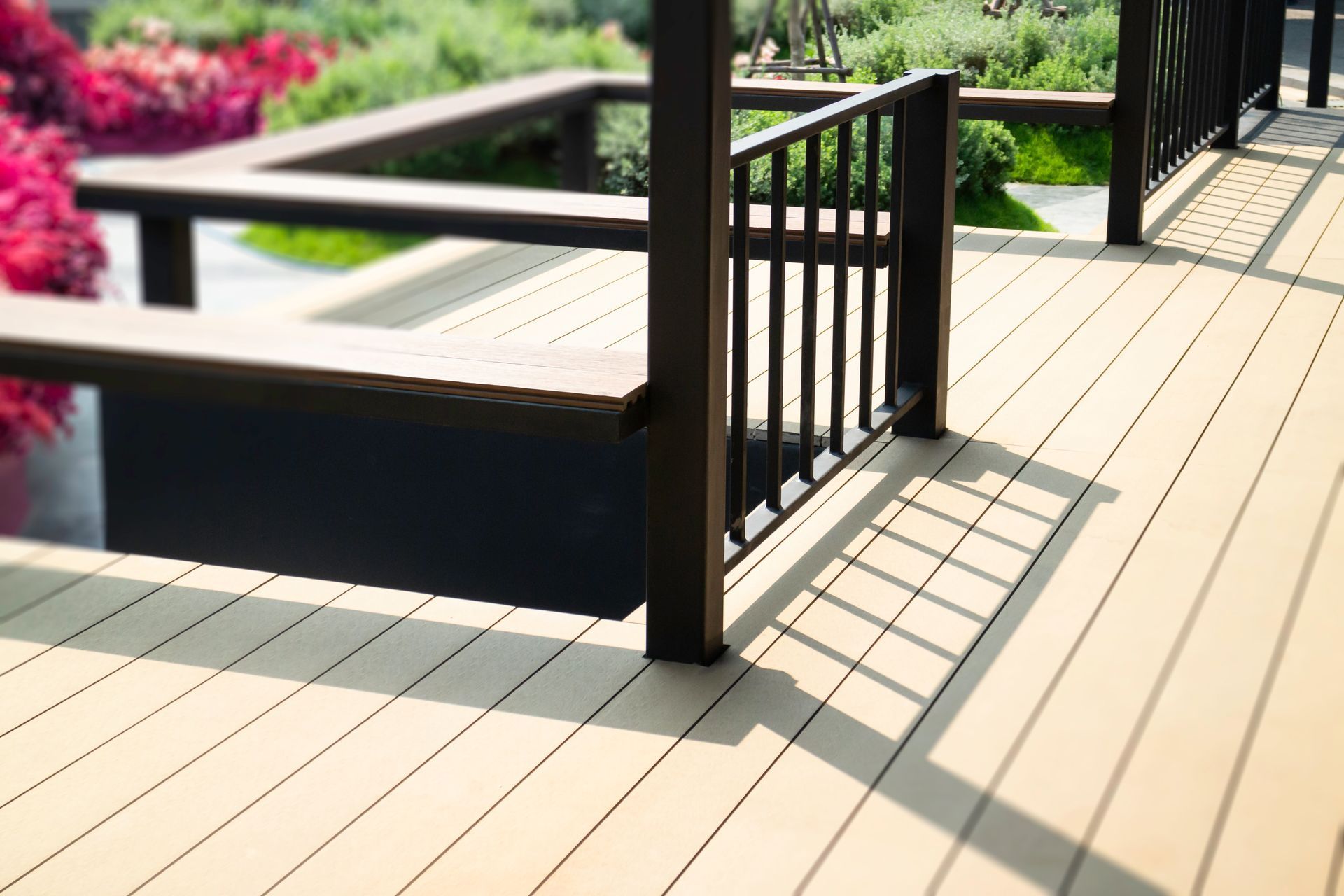
The custom deck building process involves selecting materials that stand up to constant foot traffic and weather. While surface wear is usually cosmetic, severe damage can quickly lead to tripping hazards.
• Look for popping nails: Natural wood shrinkage forces old nails to pop up above the surface of the boards.
• Check the gaps: Ensure there is still space between the boards to allow rainwater to drain away easily.
• Test for spongy spots: Walk the entire deck looking for areas that sag or feel soft under your weight.
Frequently Asked Questions
How much weight can a standard residential deck hold?
A properly built residential deck is typically designed to support 50 pounds per square foot. This calculation includes the weight of the structure itself plus the people and furniture resting on it. Large crowds concentrated in one small area can easily exceed this limit if the support joists are compromised by advanced wood rot.
What are the signs of deck ledger board failure?
The most obvious sign is a visible gap opening up between the house siding and the deck framing. You might also notice dark water stains running down the concrete foundation wall directly below the deck. If the deck feels like it bounces or sways when you walk near the house, the main ledger connection has likely loosened.
Can you replace wood deck boards with composite?
Yes, installing composite decking over an existing wood frame is a highly popular way to upgrade your outdoor space. The underlying wood joists must be in excellent structural condition and spaced no more than 16 inches apart. We always apply waterproof joist tape to the top of the old wood framing before laying down the new composite material to prevent future rot from trapped moisture.
Securing Your Outdoor Entertainment Space
Taking the time to thoroughly inspect your deck framing guarantees your late summer gatherings remain safe and enjoyable. Catching wood rot and loose hardware early prevents minor maintenance issues from turning into complete structural failures. Contact our team today to schedule an expert inspection or to start planning a custom deck rebuild.
Share This Blog